


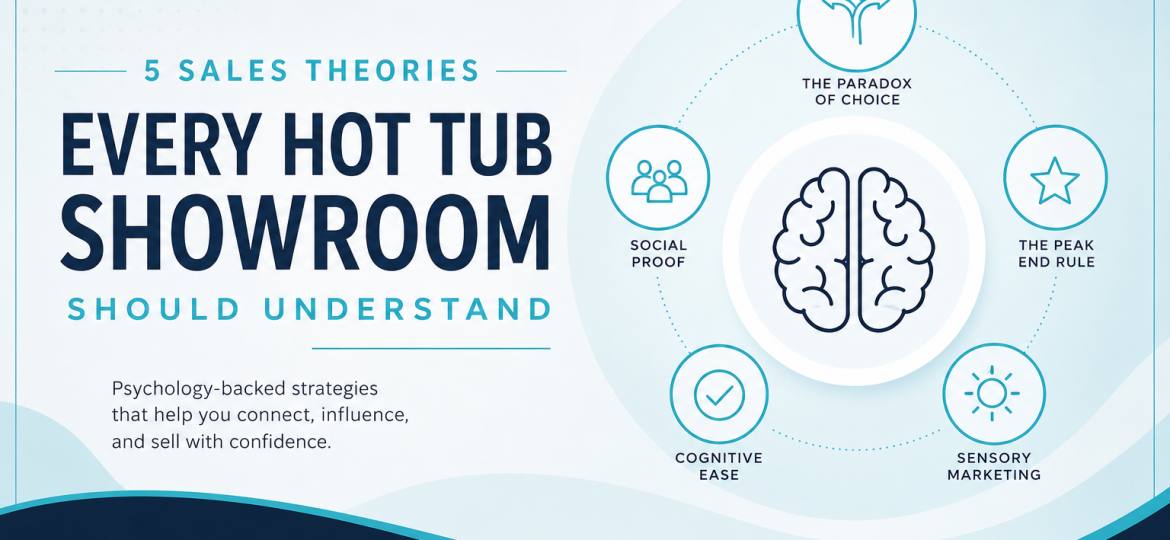
5 Sales Theories Every Hot Tub Showroom Should Understand
Selling a hot tub is rarely just about horsepower, jet counts, or cabinet colours. Most customers are trying to picture a better lifestyle, a place to relax, reconnect, recover, or simply slow down at the end of a stressful day.
The best showrooms understand this. They do not just sell products. They create experiences.
Over the years, some of the most successful retail strategies in the pool and spa industry have actually been rooted in psychology and customer behavior, whether retailers realize it or not. Here are five sales theories every hot tub showroom should understand and how they directly apply to the modern spa buying experience.
One of the biggest mistakes retailers make is giving customers too many options all at once.
While variety is important, too many choices can actually slow decision making and create anxiety. Customers begin second guessing themselves, comparing every small detail, or avoiding a purchase altogether because they feel overwhelmed.
This happens in hot tub showrooms constantly. A customer comes in looking for a spa and suddenly they are faced with multiple cover lifters, endless water care products, upgrade packages, accessories, cover colours, cabinet finishes, financing options, and delivery considerations.
The best showrooms simplify the process. They guide customers through clear recommendations, use good, better, best comparisons, bundle products together logically, and create visual displays that feel approachable instead of cluttered.
Sometimes making things easier is more valuable than offering more.
People tend to remember two things most about an experience. The emotional peak and the ending.
Customers may forget technical details from the sales conversation, but they will absolutely remember how the showroom made them feel.
They remember whether they felt welcomed or pressured. They remember if the environment felt relaxing. They remember whether staff were patient, knowledgeable, and approachable. Most importantly, they remember how the experience ended.
This is especially important in the spa industry because hot tubs are emotional purchases. Customers are investing in comfort, family time, wellness, and lifestyle.
A beautiful showroom experience followed by poor communication, delayed follow up, or a stressful delivery process can completely change how a customer views the purchase.
Customers buy with their senses long before logic enters the conversation.
Lighting, scent, sound, texture, layout, and atmosphere all influence how customers emotionally connect to a space. This is one of the reasons why the best spa showrooms feel calm, immersive, and experiential rather than transactional.
The spa industry is uniquely positioned for this because the products themselves are built around relaxation and escape.
Running water features, warm lighting, comfortable layouts, organized displays, spa side accessories, umbrellas, aromatherapy, and lifestyle merchandising all contribute to the feeling customers are chasing.
People are not just buying a hot tub. They are buying the feeling they imagine having once it is installed in their backyard.
People naturally trust experiences that feel simple and easy to understand.
When information feels confusing, cluttered, or complicated, customers become hesitant. Even great products can feel intimidating if the buying process creates too much mental friction.
This applies to both physical showrooms and websites.
Clean displays, organized signage, simple comparison tools, easy financing explanations, and clear recommendations all help customers feel more confident in their decisions.
An easy to navigate website, helpful FAQs, quick access to support, or an after hours chatbot can significantly improve customer confidence because they reduce uncertainty.
People feel safer making decisions when they see others doing the same thing.
This is why reviews, testimonials, customer photos, and referrals are so powerful in the spa industry.
Customers want reassurance. They want to know other people are enjoying the product, trusting the retailer, and having a positive ownership experience.
Showrooms that actively showcase customer installations, online reviews, lifestyle photography, and real world experiences build trust much faster than those relying only on product specs.
The buying journey often starts online long before the sales conversation begins.
Selling the Experience, Not Just the Spa
The most successful hot tub retailers understand something important. Customers rarely remember every specification. They remember how the experience made them feel.
They remember whether the process felt exciting or stressful. They remember whether ownership felt easy or overwhelming. They remember whether the environment inspired them to picture themselves relaxing at home.
Great showrooms do more than display products. They create comfort, confidence, atmosphere, and trust.
In an industry built around relaxation and lifestyle, that emotional experience may be the most important sales tool of all.