


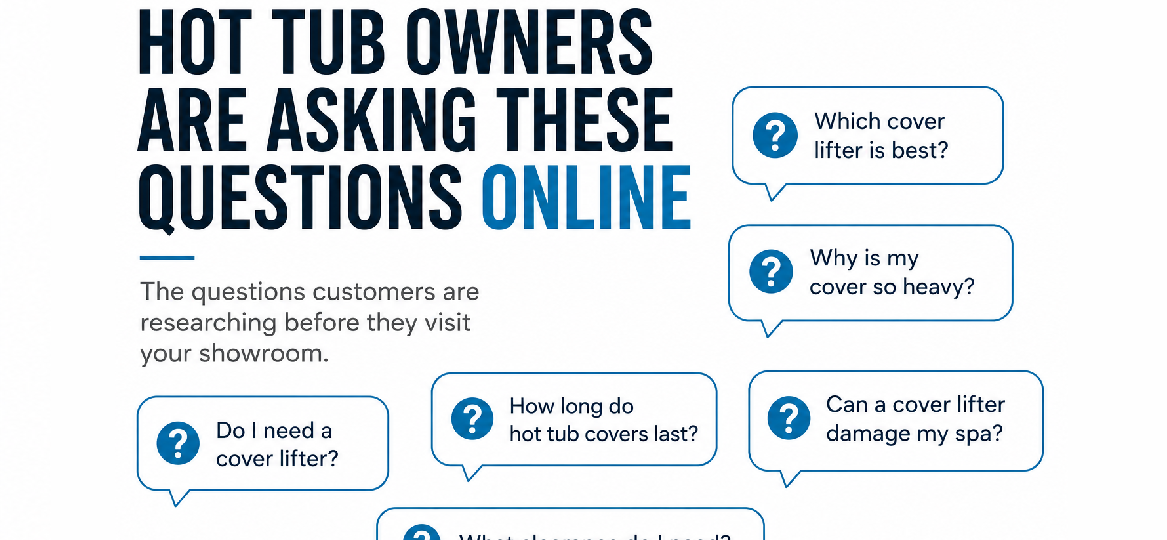
By the time a customer walks into your showroom, the conversation has usually already started-without you. They’ve read the forum threads, scrolled the Facebook owner groups, watched the unboxing videos, and worked their way through a dozen product-review comment sections. Most spa buyers now spend hours researching online before they ever shake a salesperson’s hand. They arrive with opinions, vocabulary, and a list of worries they’ve absorbed second-hand.
That changes the dealer’s job. You’re no longer the first source of information; you’re the person who confirms, corrects, and contextualizes what they’ve already heard. Dealers who know what’s being discussed online walk into that conversation with an advantage. You can anticipate objections, speak directly to fears the customer hasn’t voiced yet, and recommend the right product the first time instead of guessing.
The good news is that the questions hot tub owners ask online are remarkably consistent. Wecombed through Reddit, the spa forums, owner groups, and review boards, and the same handful of frustrations surface again and again-almost all of them tied to the cover and how it’s handled day to day. Here are the ones worth knowing, and how to turn each into a better conversation on the floor.
“Why is my cover so heavy- It is wrecking my back!?”
This is the single most common complaint in owner communities, and it shows up in two forms. New owners are surprised that a cover can weigh 50 to 75 pounds out of the box. Long-term owners are alarmed that theirs has somehow gotten heavier. The answer is waterlogging: once the vapor barrier fails and the foam core starts absorbing moisture, a cover can double or triple its original weight, and people genuinely describe needing a second person-or skipping a soak entirely-because of it.
Underneath the weight complaint is an accessibility complaint. Owners talk openly about back strain, about pulling something every time they fold the cover back, about being home alone and unable to use the tub they paid for. Older buyers and customers with any physical limitation feel this acutely.
The dealer angle: A cover lifter reframes the entire problem. A gas-assisted lifter turns a two-person, full-body effort into a smooth one-handed motion. Point customers toward the Cover Valet Pro (CV250/CV400)-the most widely used lifter in the industry-or an undermount gas-spring model like the Cover RX when they describe weight or strain. You’re not selling an accessory; you’re selling the ability to keep using the spa without an injury.
“Is a cover lifter actually worth it, or is it a gimmick?”
Online opinion splits here, and the skeptics are loud. Some owners insist they can manage the cover fine by hand and see a lifter as an upsell. The counterargument-usually from people who’ve owned a spa for a few years-is more persuasive: the lifter is what keeps the spa in regular use.
There’s a documented behavioral link worth repeating to customers. The easier a cover is to remove, the more often people actually open the tub-which means they soak more, test their water more, and balance chemistry more consistently. A cover that’s a chore to move quietly turns into a spa that sits cold and neglected.
The dealer angle: Sell the lifter as usage insurance, not convenience. If budget is the objection, the Cover Rock-It is a strong, affordable entry point that still delivers one-person operation and keeps the cover off the ground. Frame the math honestly: a customer who stops using their spa because the cover is a hassle has wasted far more than the cost of a lifter.
“I don’t have much room around my tub-can I even use one?”
Tight backyards, decks against fences, spas tucked into gazebos or alcoves-clearance anxiety comes up constantly online, and a lot of owners assume a lifter is simply off the table for them. They’ve seen the big shelf-style units that need two feet of open space behind the tub and concluded none of it applies to their setup.
The dealer angle: This is where product knowledge pays off, because the clearance story is far better than most customers realize. The Cover Valet Pro needs only four to eight inches of rear clearance and works inside most enclosures, with the open cover doubling as a privacy wall. Undermount options remove side-clearance worries almost entirely. Ask for the spa’s location and the distances around it early in the conversation-then match the model. Solving a constraint the customer thought was unsolvable builds more trust than any feature list.
“Which lifter actually works with my spa?”
The flip side of all this choice is confusion. Owners post photos of their tubs asking strangers which lifter will fit, and the answers are often wrong because shape, size, and mounting style all matter. Round and octagonal spas, oversized covers, swim spas, and tall cabinets each rule certain lifters in or out.
The dealer angle: Don’t make customers self-diagnose-that’s how they end up with the wrong unit and a return. The line is built to map cleanly: the Cover EX suits square and rectangular spas and is built from all-aluminum, corrosion-resistant construction; the Cover Caddy is the answer for round, octagonal, and large-radius spas, with a swim-spa kit for taller cabinets; the Cover RX works with virtually any shape. Confirm spa width, shape, height, and clearance, then specify the model. A two-minute fit check on the floor prevents a frustrated phone call later.
“How do I make my cover last longer?”
Cover longevity is a recurring thread, and the numbers owners quote are consistent with what the industry sees: most covers last roughly three to seven years depending on quality, climate, and care. What frustrates owners is when a cover fails early. They blame the foam or the vinyl, but the hidden culprit is often handling-dragging the cover across a deck, dropping it on the patio, or leaning it against a railing where it warps. Every rough cycle stresses seams and breaks down the foam core faster.
The dealer angle: A lifter is a cover-protection device first and a convenience second. Models like the Cover RX, with its cradle-style support, hold the cover squarely and keep it off the ground entirely, which reduces the wear that kills covers prematurely. When you sell a custom cover, attach a lifter to the conversation as the thing that protects that investment. Owners who understand the connection are far more receptive.
“I have a soft-sided or roto-molded tub-I can’t drill into it.”
This question comes from a fast-growing segment: owners of roto-molded, inflatable-adjacent, and soft-sided spas who’ve been told most lifters mount to a rigid cabinet they don’t have. They assume they’re stuck lifting by hand forever.
The dealer angle: Undermount is the entire answer, and it’s worth knowing cold. The Cover RX and Cover Rock-It use plates held in place by the weight of the spa-no screwing into the cabinet, clean installation, and full compatibility with tubs where drilling was never an option. For dealers, this opens up a customer base that often assumes accessories aren’t for them.
“My last lifter bent or broke-aren’t they all junk?”
Plenty of owners have a bad-lifter story: arms that bent under a soggy cover, brackets that pulled loose, hardware that rusted. That experience makes them skeptical of the whole category.
The dealer angle: Acknowledge it honestly-cheap lifters do fail, often because a waterlogged cover overloaded an undersized arm. Then redirect to construction and backing. The Cover EX is built entirely from aluminum, including the brackets, with zinc-plated and powder-coated finishes for corrosion resistance, and the lifter line carries a five-year limited warranty. Pair durability talk with a reminder that replacing a failing cover before it waterlogs protects the lifter too.
What Dealers Can Learn from Online Conversations
The owner discussions happening online aren’t noise-they’re a free, continuous focus group, and they point to a few clear lessons:
- The cover is the friction point. Nearly every frustration owners voice-weight, back strain, low usage, premature wear-traces back to handling the cover. Lead with that, not with horsepower or jet counts.
- Anticipate the objection before it’s spoken. Customers arrive worried about clearance, compatibility, drilling, and durability. Raising those yourself, with a specific answer, signals expertise and shortens the path to a sale.
- Sell the lifter as protection and usage, not luxury. The strongest pitch isn’t comfort-it’s that an easy cover keeps the spa in use and the cover in one piece.
- Match, don’t list. Owners get overwhelmed by options online. Your value is narrowing it to the one right model-Pro, RX, EX, Caddy, or Rock-It-based on their shape, space, and cabinet.
The customer has already done their homework before they reach you. Meeting them with the answers they were searching for is what turns a researcher into a buyer-and a buyer into someone who actually uses, and loves, their spa.
Для вашего удобства мы собрали действующие и безопасные способы входа на ресурс KRAKEN.
Ниже представлены официальные и резервные зеркала платформы KRAKEN, которые гарантируют стабильный доступ.
Список рабочих адресов KRAKEN для перехода:
Первое официальное зеркало KRAKEN:
https://edicioneswanafrica.com
http://h2ports.eu/
https://chemcorchemical.com
https://bookstore.au.edu
https://rubiconre.com
https://greatlakesmarine.com
https://dibtech.com.au
https://www.botticellis.org
https://dopravasilnice.cz
https://www.colegiomascamarena.es
https://www.botticellis.org
https://ronosmena.com
https://clicktel.com
https://www.colegiomascamarena.es
https://gaslsolutions.com
https://ronosmena.com
https://rocstudios.tv
https://drarealestate.com
https://dopravasilnice.cz
https://www.benzing-watertechnology.com
https://www.aldi4.org
https://pacsecurities.com
https://www.techstartupjobs.com
https://dopravasilnice.cz
https://setupstand.com
https://theorangecurtainrev.com
https://www.pvsv.nl
https://elborgo.com
https://scottiesontheriver.net
https://royalhijyen.com/
https://www.nextgenomics.it
https://mplastpipe.com/
https://fraternidad.info
https://kovotrade.com
https://cornerstoremusic.com
https://aydglass.com
https://engecursosconsultoria.com.br
https://ackubd.com
https://ujjainrealestate.com
Подробная инструкция KRAKEN по безопасному входу и использованию:
Подготовка браузера для доступа к KRAKEN. Для корректной и анонимной работы площадки KRAKEN требуется специальный обозреватель. Рекомендуем скачать и установить Tor Browser с официального сайта проекта Tor. Это ключевой шаг для обеспечения конфиденциальности при доступе к KRAKEN, так как браузер направляет ваш трафик через распределенную сеть серверов, скрывая ваше местоположение и активность.
Запуск и подключение к сети для KRAKEN. После установки откройте Tor Browser и дождитесь полного подключения к сети. Иконка в верхней части окна браузера покажет статус соединения. Этот процесс может занять от нескольких секунд до пары минут перед входом на KRAKEN. Убедитесь, что подключение установлено успешно.
Переход на сайт KRAKEN. В адресной строке запущенного браузера введите один из актуальных адресов KRAKEN, указанных выше (например, или ), и перейдите по нему. Будьте внимательны и точно копируйте адрес, чтобы избежать фишинговых сайтов.
Регистрация или авторизация на KRAKEN. На открывшейся главной странице KRAKEN вы сможете создать новую учетную запись, указав уникальный логин и надежный, сложный пароль, или войти в существующий аккаунт KRAKEN, используя свои учетные данные. Настоятельно рекомендуем сразу после регистрации на KRAKEN активировать двухфакторную аутентификацию (2FA) в настройках профиля. Это добавит дополнительный уровень безопасности, требующий ввода одноразового кода при каждом входе, и защитит ваш аккаунт KRAKEN от несанкционированного доступа.
Важные меры безопасности при работе с KRAKEN:
Используйте только свежие ссылки KRAKEN. Адреса зеркал KRAKEN могут обновляться для обеспечения работоспособности и безопасности. Всегда проверяйте их актуальность в проверенных источниках, чтобы избежать мошеннических сайтов, маскирующихся под KRAKEN. Не сохраняйте ссылки в закладках надолго без проверки.
Дополните анонимность VPN для доступа к KRAKEN. Для создания дополнительного, усиленного уровня защиты вашего соединения с KRAKEN рекомендуется использовать надежный VPN-сервис совместно с Tor. Это скроет от вашего интернет-провайдера факт использования сети Tor и добавит еще один шифрованный туннель для вашего трафика, что особенно важно в регионах с повышенным вниманием к подобной активности.
Проверяйте репутацию контрагентов на KRAKEN. Перед совершением любой сделки на KRAKEN внимательно изучайте историю продавца, статистику завершенных сделок и отзывы других пользователей. Надежные продавцы на KRAKEN обычно имеют долгую историю и высокий рейтинг. Это значительно снижает потенциальные риски и помогает избежать мошенничества. Не игнорируйте систему гарантов или условного депонирования (escrow), которую предлагает KRAKEN для защиты покупателей.
Критически оценивайте информацию. Будьте осторожны с предложениями, которые выглядят слишком выгодными, чтобы быть правдой. Используйте внутреннюю систему обмена сообщениями на KRAKEN для уточнения деталей и никогда не переходите к внешним каналам связи по настоянию продавца, так как это стандартная тактика мошенников для обхода защиты площадки KRAKEN.
Почему пользователи выбирают площадку KRAKEN?
Маркетплейс KRAKEN заслужил доверие многочисленной аудитории благодаря сочетанию ключевых факторов. Во-первых, это широкий и разнообразный ассортимент, представленный сотнями продавцов. Во-вторых, интуитивно понятный интерфейс KRAKEN, который упрощает навигацию, поиск товаров и управление заказами даже для новых пользователей. В-третьих, продуманная система безопасных транзакций, включающая механизмы разрешения споров (диспутов) и возможность использования условного депонирования, что минимизирует риски для обеих сторон сделки. На KRAKEN функциональность сочетается с внимательным отношением к безопасности клиентов, что делает процесс покупок более предсказуемым, защищенным и, как следствие, популярным среди пользователей, ценящих анонимность и надежность.
Популярные поисковые запросы, связанные с доступом к KRAKEN:
Быстрый алгоритм действий для доступа к KRAKEN:
1. Установите Tor Browser с официального сайта.
2. Откройте браузер и дождитесь успешного подключения к сети Tor.
3. В адресной строке введите актуальный адрес KRAKEN: https://dopravasilnice.cz
4. Пройдите регистрацию, создав уникальный логин и сложный пароль, или авторизуйтесь в системе KRAKEN.
Немедленно включите двухфакторную аутентификацию в настройках вашего профиля KRAKEN.
Для максимальной анонимности рассмотрите возможность использования VPN-сервиса перед запуском Tor Browser.
Всегда проверяйте репутацию продавца по отзывам и рейтингу перед совершением сделки на KRAKEN.
кракен даркнет в тор
ссылка на кракен
кракен даркнет
krab сайт
кракен зеркало тор
кракен телеграм канал
ссылки kraken
кракен ссылки
kraken darknet market ссылка
ссылка kraken
Для вашего удобства мы собрали действующие и безопасные способы входа на ресурс KRAKEN.
Ниже представлены официальные и резервные зеркала платформы KRAKEN, которые гарантируют стабильный доступ.
Список рабочих адресов KRAKEN для перехода:
Первое официальное зеркало KRAKEN:
https://edicioneswanafrica.com
http://h2ports.eu/
https://chemcorchemical.com
https://bookstore.au.edu
https://rubiconre.com
https://greatlakesmarine.com
https://dibtech.com.au
https://www.botticellis.org
https://dopravasilnice.cz
https://www.colegiomascamarena.es
https://www.botticellis.org
https://ronosmena.com
https://clicktel.com
https://www.colegiomascamarena.es
https://gaslsolutions.com
https://ronosmena.com
https://rocstudios.tv
https://drarealestate.com
https://dopravasilnice.cz
https://www.benzing-watertechnology.com
https://www.aldi4.org
https://pacsecurities.com
https://www.techstartupjobs.com
https://dopravasilnice.cz
https://setupstand.com
https://theorangecurtainrev.com
https://www.pvsv.nl
https://elborgo.com
https://scottiesontheriver.net
https://royalhijyen.com/
https://www.nextgenomics.it
https://mplastpipe.com/
https://fraternidad.info
https://kovotrade.com
https://cornerstoremusic.com
https://aydglass.com
https://engecursosconsultoria.com.br
https://ackubd.com
https://ujjainrealestate.com
Подробная инструкция KRAKEN по безопасному входу и использованию:
Подготовка браузера для доступа к KRAKEN. Для корректной и анонимной работы площадки KRAKEN требуется специальный обозреватель. Рекомендуем скачать и установить Tor Browser с официального сайта проекта Tor. Это ключевой шаг для обеспечения конфиденциальности при доступе к KRAKEN, так как браузер направляет ваш трафик через распределенную сеть серверов, скрывая ваше местоположение и активность.
Запуск и подключение к сети для KRAKEN. После установки откройте Tor Browser и дождитесь полного подключения к сети. Иконка в верхней части окна браузера покажет статус соединения. Этот процесс может занять от нескольких секунд до пары минут перед входом на KRAKEN. Убедитесь, что подключение установлено успешно.
Переход на сайт KRAKEN. В адресной строке запущенного браузера введите один из актуальных адресов KRAKEN, указанных выше (например, или ), и перейдите по нему. Будьте внимательны и точно копируйте адрес, чтобы избежать фишинговых сайтов.
Регистрация или авторизация на KRAKEN. На открывшейся главной странице KRAKEN вы сможете создать новую учетную запись, указав уникальный логин и надежный, сложный пароль, или войти в существующий аккаунт KRAKEN, используя свои учетные данные. Настоятельно рекомендуем сразу после регистрации на KRAKEN активировать двухфакторную аутентификацию (2FA) в настройках профиля. Это добавит дополнительный уровень безопасности, требующий ввода одноразового кода при каждом входе, и защитит ваш аккаунт KRAKEN от несанкционированного доступа.
Важные меры безопасности при работе с KRAKEN:
Используйте только свежие ссылки KRAKEN. Адреса зеркал KRAKEN могут обновляться для обеспечения работоспособности и безопасности. Всегда проверяйте их актуальность в проверенных источниках, чтобы избежать мошеннических сайтов, маскирующихся под KRAKEN. Не сохраняйте ссылки в закладках надолго без проверки.
Дополните анонимность VPN для доступа к KRAKEN. Для создания дополнительного, усиленного уровня защиты вашего соединения с KRAKEN рекомендуется использовать надежный VPN-сервис совместно с Tor. Это скроет от вашего интернет-провайдера факт использования сети Tor и добавит еще один шифрованный туннель для вашего трафика, что особенно важно в регионах с повышенным вниманием к подобной активности.
Проверяйте репутацию контрагентов на KRAKEN. Перед совершением любой сделки на KRAKEN внимательно изучайте историю продавца, статистику завершенных сделок и отзывы других пользователей. Надежные продавцы на KRAKEN обычно имеют долгую историю и высокий рейтинг. Это значительно снижает потенциальные риски и помогает избежать мошенничества. Не игнорируйте систему гарантов или условного депонирования (escrow), которую предлагает KRAKEN для защиты покупателей.
Критически оценивайте информацию. Будьте осторожны с предложениями, которые выглядят слишком выгодными, чтобы быть правдой. Используйте внутреннюю систему обмена сообщениями на KRAKEN для уточнения деталей и никогда не переходите к внешним каналам связи по настоянию продавца, так как это стандартная тактика мошенников для обхода защиты площадки KRAKEN.
Почему пользователи выбирают площадку KRAKEN?
Маркетплейс KRAKEN заслужил доверие многочисленной аудитории благодаря сочетанию ключевых факторов. Во-первых, это широкий и разнообразный ассортимент, представленный сотнями продавцов. Во-вторых, интуитивно понятный интерфейс KRAKEN, который упрощает навигацию, поиск товаров и управление заказами даже для новых пользователей. В-третьих, продуманная система безопасных транзакций, включающая механизмы разрешения споров (диспутов) и возможность использования условного депонирования, что минимизирует риски для обеих сторон сделки. На KRAKEN функциональность сочетается с внимательным отношением к безопасности клиентов, что делает процесс покупок более предсказуемым, защищенным и, как следствие, популярным среди пользователей, ценящих анонимность и надежность.
Популярные поисковые запросы, связанные с доступом к KRAKEN:
Быстрый алгоритм действий для доступа к KRAKEN:
1. Установите Tor Browser с официального сайта.
2. Откройте браузер и дождитесь успешного подключения к сети Tor.
3. В адресной строке введите актуальный адрес KRAKEN: https://ronosmena.com
4. Пройдите регистрацию, создав уникальный логин и сложный пароль, или авторизуйтесь в системе KRAKEN.
Немедленно включите двухфакторную аутентификацию в настройках вашего профиля KRAKEN.
Для максимальной анонимности рассмотрите возможность использования VPN-сервиса перед запуском Tor Browser.
Всегда проверяйте репутацию продавца по отзывам и рейтингу перед совершением сделки на KRAKEN.
кракен вход на сайт
kraken официальный
https krab at
krab СЃСЃ
kraken ссылка тор
кракен ссылка тор
ссылка кракен через тор
кракен в
кракен актуальные ссылки
кракен тг
Для вашего удобства мы собрали действующие и безопасные способы входа на ресурс KRAKEN.
Ниже представлены официальные и резервные зеркала платформы KRAKEN, которые гарантируют стабильный доступ.
Список рабочих адресов KRAKEN для перехода:
Первое официальное зеркало KRAKEN:
https://edicioneswanafrica.com
http://h2ports.eu/
https://chemcorchemical.com
https://bookstore.au.edu
https://rubiconre.com
https://greatlakesmarine.com
https://dibtech.com.au
https://www.botticellis.org
https://dopravasilnice.cz
https://www.colegiomascamarena.es
https://www.botticellis.org
https://ronosmena.com
https://clicktel.com
https://www.colegiomascamarena.es
https://gaslsolutions.com
https://ronosmena.com
https://rocstudios.tv
https://drarealestate.com
https://dopravasilnice.cz
https://www.benzing-watertechnology.com
https://www.aldi4.org
https://pacsecurities.com
https://www.techstartupjobs.com
https://dopravasilnice.cz
https://setupstand.com
https://theorangecurtainrev.com
https://www.pvsv.nl
https://elborgo.com
https://scottiesontheriver.net
https://royalhijyen.com/
https://www.nextgenomics.it
https://mplastpipe.com/
https://fraternidad.info
https://kovotrade.com
https://cornerstoremusic.com
https://aydglass.com
https://engecursosconsultoria.com.br
https://ackubd.com
https://ujjainrealestate.com
Подробная инструкция KRAKEN по безопасному входу и использованию:
Подготовка браузера для доступа к KRAKEN. Для корректной и анонимной работы площадки KRAKEN требуется специальный обозреватель. Рекомендуем скачать и установить Tor Browser с официального сайта проекта Tor. Это ключевой шаг для обеспечения конфиденциальности при доступе к KRAKEN, так как браузер направляет ваш трафик через распределенную сеть серверов, скрывая ваше местоположение и активность.
Запуск и подключение к сети для KRAKEN. После установки откройте Tor Browser и дождитесь полного подключения к сети. Иконка в верхней части окна браузера покажет статус соединения. Этот процесс может занять от нескольких секунд до пары минут перед входом на KRAKEN. Убедитесь, что подключение установлено успешно.
Переход на сайт KRAKEN. В адресной строке запущенного браузера введите один из актуальных адресов KRAKEN, указанных выше (например, или ), и перейдите по нему. Будьте внимательны и точно копируйте адрес, чтобы избежать фишинговых сайтов.
Регистрация или авторизация на KRAKEN. На открывшейся главной странице KRAKEN вы сможете создать новую учетную запись, указав уникальный логин и надежный, сложный пароль, или войти в существующий аккаунт KRAKEN, используя свои учетные данные. Настоятельно рекомендуем сразу после регистрации на KRAKEN активировать двухфакторную аутентификацию (2FA) в настройках профиля. Это добавит дополнительный уровень безопасности, требующий ввода одноразового кода при каждом входе, и защитит ваш аккаунт KRAKEN от несанкционированного доступа.
Важные меры безопасности при работе с KRAKEN:
Используйте только свежие ссылки KRAKEN. Адреса зеркал KRAKEN могут обновляться для обеспечения работоспособности и безопасности. Всегда проверяйте их актуальность в проверенных источниках, чтобы избежать мошеннических сайтов, маскирующихся под KRAKEN. Не сохраняйте ссылки в закладках надолго без проверки.
Дополните анонимность VPN для доступа к KRAKEN. Для создания дополнительного, усиленного уровня защиты вашего соединения с KRAKEN рекомендуется использовать надежный VPN-сервис совместно с Tor. Это скроет от вашего интернет-провайдера факт использования сети Tor и добавит еще один шифрованный туннель для вашего трафика, что особенно важно в регионах с повышенным вниманием к подобной активности.
Проверяйте репутацию контрагентов на KRAKEN. Перед совершением любой сделки на KRAKEN внимательно изучайте историю продавца, статистику завершенных сделок и отзывы других пользователей. Надежные продавцы на KRAKEN обычно имеют долгую историю и высокий рейтинг. Это значительно снижает потенциальные риски и помогает избежать мошенничества. Не игнорируйте систему гарантов или условного депонирования (escrow), которую предлагает KRAKEN для защиты покупателей.
Критически оценивайте информацию. Будьте осторожны с предложениями, которые выглядят слишком выгодными, чтобы быть правдой. Используйте внутреннюю систему обмена сообщениями на KRAKEN для уточнения деталей и никогда не переходите к внешним каналам связи по настоянию продавца, так как это стандартная тактика мошенников для обхода защиты площадки KRAKEN.
Почему пользователи выбирают площадку KRAKEN?
Маркетплейс KRAKEN заслужил доверие многочисленной аудитории благодаря сочетанию ключевых факторов. Во-первых, это широкий и разнообразный ассортимент, представленный сотнями продавцов. Во-вторых, интуитивно понятный интерфейс KRAKEN, который упрощает навигацию, поиск товаров и управление заказами даже для новых пользователей. В-третьих, продуманная система безопасных транзакций, включающая механизмы разрешения споров (диспутов) и возможность использования условного депонирования, что минимизирует риски для обеих сторон сделки. На KRAKEN функциональность сочетается с внимательным отношением к безопасности клиентов, что делает процесс покупок более предсказуемым, защищенным и, как следствие, популярным среди пользователей, ценящих анонимность и надежность.
Популярные поисковые запросы, связанные с доступом к KRAKEN:
Быстрый алгоритм действий для доступа к KRAKEN:
1. Установите Tor Browser с официального сайта.
2. Откройте браузер и дождитесь успешного подключения к сети Tor.
3. В адресной строке введите актуальный адрес KRAKEN: https://kovotrade.com
4. Пройдите регистрацию, создав уникальный логин и сложный пароль, или авторизуйтесь в системе KRAKEN.
Немедленно включите двухфакторную аутентификацию в настройках вашего профиля KRAKEN.
Для максимальной анонимности рассмотрите возможность использования VPN-сервиса перед запуском Tor Browser.
Всегда проверяйте репутацию продавца по отзывам и рейтингу перед совершением сделки на KRAKEN.
кракен даркнет вход
кракен дарк нет
kraken ссылки
kraken не работает
https kraken
http kraken
кракен зайти
kraken маркетплейс
kraken krab
кракен сайт даркнет
Для вашего удобства мы собрали действующие и безопасные способы входа на ресурс KRAKEN.
Ниже представлены официальные и резервные зеркала платформы KRAKEN, которые гарантируют стабильный доступ.
Список рабочих адресов KRAKEN для перехода:
Первое официальное зеркало KRAKEN:
https://edicioneswanafrica.com
http://h2ports.eu/
https://chemcorchemical.com
https://bookstore.au.edu
https://rubiconre.com
https://greatlakesmarine.com
https://dibtech.com.au
https://www.botticellis.org
https://dopravasilnice.cz
https://www.colegiomascamarena.es
https://www.botticellis.org
https://ronosmena.com
https://clicktel.com
https://www.colegiomascamarena.es
https://gaslsolutions.com
https://ronosmena.com
https://rocstudios.tv
https://drarealestate.com
https://dopravasilnice.cz
https://www.benzing-watertechnology.com
https://www.aldi4.org
https://pacsecurities.com
https://www.techstartupjobs.com
https://dopravasilnice.cz
https://setupstand.com
https://theorangecurtainrev.com
https://www.pvsv.nl
https://elborgo.com
https://scottiesontheriver.net
https://royalhijyen.com/
https://www.nextgenomics.it
https://mplastpipe.com/
https://fraternidad.info
https://kovotrade.com
https://cornerstoremusic.com
https://aydglass.com
https://engecursosconsultoria.com.br
https://ackubd.com
https://ujjainrealestate.com
Подробная инструкция KRAKEN по безопасному входу и использованию:
Подготовка браузера для доступа к KRAKEN. Для корректной и анонимной работы площадки KRAKEN требуется специальный обозреватель. Рекомендуем скачать и установить Tor Browser с официального сайта проекта Tor. Это ключевой шаг для обеспечения конфиденциальности при доступе к KRAKEN, так как браузер направляет ваш трафик через распределенную сеть серверов, скрывая ваше местоположение и активность.
Запуск и подключение к сети для KRAKEN. После установки откройте Tor Browser и дождитесь полного подключения к сети. Иконка в верхней части окна браузера покажет статус соединения. Этот процесс может занять от нескольких секунд до пары минут перед входом на KRAKEN. Убедитесь, что подключение установлено успешно.
Переход на сайт KRAKEN. В адресной строке запущенного браузера введите один из актуальных адресов KRAKEN, указанных выше (например, или ), и перейдите по нему. Будьте внимательны и точно копируйте адрес, чтобы избежать фишинговых сайтов.
Регистрация или авторизация на KRAKEN. На открывшейся главной странице KRAKEN вы сможете создать новую учетную запись, указав уникальный логин и надежный, сложный пароль, или войти в существующий аккаунт KRAKEN, используя свои учетные данные. Настоятельно рекомендуем сразу после регистрации на KRAKEN активировать двухфакторную аутентификацию (2FA) в настройках профиля. Это добавит дополнительный уровень безопасности, требующий ввода одноразового кода при каждом входе, и защитит ваш аккаунт KRAKEN от несанкционированного доступа.
Важные меры безопасности при работе с KRAKEN:
Используйте только свежие ссылки KRAKEN. Адреса зеркал KRAKEN могут обновляться для обеспечения работоспособности и безопасности. Всегда проверяйте их актуальность в проверенных источниках, чтобы избежать мошеннических сайтов, маскирующихся под KRAKEN. Не сохраняйте ссылки в закладках надолго без проверки.
Дополните анонимность VPN для доступа к KRAKEN. Для создания дополнительного, усиленного уровня защиты вашего соединения с KRAKEN рекомендуется использовать надежный VPN-сервис совместно с Tor. Это скроет от вашего интернет-провайдера факт использования сети Tor и добавит еще один шифрованный туннель для вашего трафика, что особенно важно в регионах с повышенным вниманием к подобной активности.
Проверяйте репутацию контрагентов на KRAKEN. Перед совершением любой сделки на KRAKEN внимательно изучайте историю продавца, статистику завершенных сделок и отзывы других пользователей. Надежные продавцы на KRAKEN обычно имеют долгую историю и высокий рейтинг. Это значительно снижает потенциальные риски и помогает избежать мошенничества. Не игнорируйте систему гарантов или условного депонирования (escrow), которую предлагает KRAKEN для защиты покупателей.
Критически оценивайте информацию. Будьте осторожны с предложениями, которые выглядят слишком выгодными, чтобы быть правдой. Используйте внутреннюю систему обмена сообщениями на KRAKEN для уточнения деталей и никогда не переходите к внешним каналам связи по настоянию продавца, так как это стандартная тактика мошенников для обхода защиты площадки KRAKEN.
Почему пользователи выбирают площадку KRAKEN?
Маркетплейс KRAKEN заслужил доверие многочисленной аудитории благодаря сочетанию ключевых факторов. Во-первых, это широкий и разнообразный ассортимент, представленный сотнями продавцов. Во-вторых, интуитивно понятный интерфейс KRAKEN, который упрощает навигацию, поиск товаров и управление заказами даже для новых пользователей. В-третьих, продуманная система безопасных транзакций, включающая механизмы разрешения споров (диспутов) и возможность использования условного депонирования, что минимизирует риски для обеих сторон сделки. На KRAKEN функциональность сочетается с внимательным отношением к безопасности клиентов, что делает процесс покупок более предсказуемым, защищенным и, как следствие, популярным среди пользователей, ценящих анонимность и надежность.
Популярные поисковые запросы, связанные с доступом к KRAKEN:
Быстрый алгоритм действий для доступа к KRAKEN:
1. Установите Tor Browser с официального сайта.
2. Откройте браузер и дождитесь успешного подключения к сети Tor.
3. В адресной строке введите актуальный адрес KRAKEN: https://www.benzing-watertechnology.com
4. Пройдите регистрацию, создав уникальный логин и сложный пароль, или авторизуйтесь в системе KRAKEN.
Немедленно включите двухфакторную аутентификацию в настройках вашего профиля KRAKEN.
Для максимальной анонимности рассмотрите возможность использования VPN-сервиса перед запуском Tor Browser.
Всегда проверяйте репутацию продавца по отзывам и рейтингу перед совершением сделки на KRAKEN.
kraken cc
kraken marketplace ссылка
кракен зарегистрироваться
kraken onion link
ссылка на кракен маркет
кракен тор ссылка
kraken маркет
ссылка kraken cc
kraken krab
кракен клир ссылка
Для вашего удобства мы собрали действующие и безопасные способы входа на ресурс KRAKEN.
Ниже представлены официальные и резервные зеркала платформы KRAKEN, которые гарантируют стабильный доступ.
Список рабочих адресов KRAKEN для перехода:
Первое официальное зеркало KRAKEN:
https://edicioneswanafrica.com
http://h2ports.eu/
https://chemcorchemical.com
https://bookstore.au.edu
https://rubiconre.com
https://greatlakesmarine.com
https://dibtech.com.au
https://www.botticellis.org
https://dopravasilnice.cz
https://www.colegiomascamarena.es
https://www.botticellis.org
https://ronosmena.com
https://clicktel.com
https://www.colegiomascamarena.es
https://gaslsolutions.com
https://ronosmena.com
https://rocstudios.tv
https://drarealestate.com
https://dopravasilnice.cz
https://www.benzing-watertechnology.com
https://www.aldi4.org
https://pacsecurities.com
https://www.techstartupjobs.com
https://dopravasilnice.cz
https://setupstand.com
https://theorangecurtainrev.com
https://www.pvsv.nl
https://elborgo.com
https://scottiesontheriver.net
https://royalhijyen.com/
https://www.nextgenomics.it
https://mplastpipe.com/
https://fraternidad.info
https://kovotrade.com
https://cornerstoremusic.com
https://aydglass.com
https://engecursosconsultoria.com.br
https://ackubd.com
https://ujjainrealestate.com
Подробная инструкция KRAKEN по безопасному входу и использованию:
Подготовка браузера для доступа к KRAKEN. Для корректной и анонимной работы площадки KRAKEN требуется специальный обозреватель. Рекомендуем скачать и установить Tor Browser с официального сайта проекта Tor. Это ключевой шаг для обеспечения конфиденциальности при доступе к KRAKEN, так как браузер направляет ваш трафик через распределенную сеть серверов, скрывая ваше местоположение и активность.
Запуск и подключение к сети для KRAKEN. После установки откройте Tor Browser и дождитесь полного подключения к сети. Иконка в верхней части окна браузера покажет статус соединения. Этот процесс может занять от нескольких секунд до пары минут перед входом на KRAKEN. Убедитесь, что подключение установлено успешно.
Переход на сайт KRAKEN. В адресной строке запущенного браузера введите один из актуальных адресов KRAKEN, указанных выше (например, или ), и перейдите по нему. Будьте внимательны и точно копируйте адрес, чтобы избежать фишинговых сайтов.
Регистрация или авторизация на KRAKEN. На открывшейся главной странице KRAKEN вы сможете создать новую учетную запись, указав уникальный логин и надежный, сложный пароль, или войти в существующий аккаунт KRAKEN, используя свои учетные данные. Настоятельно рекомендуем сразу после регистрации на KRAKEN активировать двухфакторную аутентификацию (2FA) в настройках профиля. Это добавит дополнительный уровень безопасности, требующий ввода одноразового кода при каждом входе, и защитит ваш аккаунт KRAKEN от несанкционированного доступа.
Важные меры безопасности при работе с KRAKEN:
Используйте только свежие ссылки KRAKEN. Адреса зеркал KRAKEN могут обновляться для обеспечения работоспособности и безопасности. Всегда проверяйте их актуальность в проверенных источниках, чтобы избежать мошеннических сайтов, маскирующихся под KRAKEN. Не сохраняйте ссылки в закладках надолго без проверки.
Дополните анонимность VPN для доступа к KRAKEN. Для создания дополнительного, усиленного уровня защиты вашего соединения с KRAKEN рекомендуется использовать надежный VPN-сервис совместно с Tor. Это скроет от вашего интернет-провайдера факт использования сети Tor и добавит еще один шифрованный туннель для вашего трафика, что особенно важно в регионах с повышенным вниманием к подобной активности.
Проверяйте репутацию контрагентов на KRAKEN. Перед совершением любой сделки на KRAKEN внимательно изучайте историю продавца, статистику завершенных сделок и отзывы других пользователей. Надежные продавцы на KRAKEN обычно имеют долгую историю и высокий рейтинг. Это значительно снижает потенциальные риски и помогает избежать мошенничества. Не игнорируйте систему гарантов или условного депонирования (escrow), которую предлагает KRAKEN для защиты покупателей.
Критически оценивайте информацию. Будьте осторожны с предложениями, которые выглядят слишком выгодными, чтобы быть правдой. Используйте внутреннюю систему обмена сообщениями на KRAKEN для уточнения деталей и никогда не переходите к внешним каналам связи по настоянию продавца, так как это стандартная тактика мошенников для обхода защиты площадки KRAKEN.
Почему пользователи выбирают площадку KRAKEN?
Маркетплейс KRAKEN заслужил доверие многочисленной аудитории благодаря сочетанию ключевых факторов. Во-первых, это широкий и разнообразный ассортимент, представленный сотнями продавцов. Во-вторых, интуитивно понятный интерфейс KRAKEN, который упрощает навигацию, поиск товаров и управление заказами даже для новых пользователей. В-третьих, продуманная система безопасных транзакций, включающая механизмы разрешения споров (диспутов) и возможность использования условного депонирования, что минимизирует риски для обеих сторон сделки. На KRAKEN функциональность сочетается с внимательным отношением к безопасности клиентов, что делает процесс покупок более предсказуемым, защищенным и, как следствие, популярным среди пользователей, ценящих анонимность и надежность.
Популярные поисковые запросы, связанные с доступом к KRAKEN:
Быстрый алгоритм действий для доступа к KRAKEN:
1. Установите Tor Browser с официального сайта.
2. Откройте браузер и дождитесь успешного подключения к сети Tor.
3. В адресной строке введите актуальный адрес KRAKEN: https://dopravasilnice.cz
4. Пройдите регистрацию, создав уникальный логин и сложный пароль, или авторизуйтесь в системе KRAKEN.
Немедленно включите двухфакторную аутентификацию в настройках вашего профиля KRAKEN.
Для максимальной анонимности рассмотрите возможность использования VPN-сервиса перед запуском Tor Browser.
Всегда проверяйте репутацию продавца по отзывам и рейтингу перед совершением сделки на KRAKEN.
кракен зеркала
зеркала kraken
кракен даркнет маркет ссылка
ссылка на кракен тор
https kraken
krab СЃСЃ
платформа кракен
кракен вход ссылка
kraken официальный сайт
кракен ссылка на сайт
Для вашего удобства мы собрали действующие и безопасные способы входа на ресурс KRAKEN.
Ниже представлены официальные и резервные зеркала платформы KRAKEN, которые гарантируют стабильный доступ.
Список рабочих адресов KRAKEN для перехода:
Первое официальное зеркало KRAKEN:
https://edicioneswanafrica.com
http://h2ports.eu/
https://chemcorchemical.com
https://bookstore.au.edu
https://rubiconre.com
https://greatlakesmarine.com
https://dibtech.com.au
https://www.botticellis.org
https://dopravasilnice.cz
https://www.colegiomascamarena.es
https://www.botticellis.org
https://ronosmena.com
https://clicktel.com
https://www.colegiomascamarena.es
https://gaslsolutions.com
https://ronosmena.com
https://rocstudios.tv
https://drarealestate.com
https://dopravasilnice.cz
https://www.benzing-watertechnology.com
https://www.aldi4.org
https://pacsecurities.com
https://www.techstartupjobs.com
https://dopravasilnice.cz
https://setupstand.com
https://theorangecurtainrev.com
https://www.pvsv.nl
https://elborgo.com
https://scottiesontheriver.net
https://royalhijyen.com/
https://www.nextgenomics.it
https://mplastpipe.com/
https://fraternidad.info
https://kovotrade.com
https://cornerstoremusic.com
https://aydglass.com
https://engecursosconsultoria.com.br
https://ackubd.com
https://ujjainrealestate.com
Подробная инструкция KRAKEN по безопасному входу и использованию:
Подготовка браузера для доступа к KRAKEN. Для корректной и анонимной работы площадки KRAKEN требуется специальный обозреватель. Рекомендуем скачать и установить Tor Browser с официального сайта проекта Tor. Это ключевой шаг для обеспечения конфиденциальности при доступе к KRAKEN, так как браузер направляет ваш трафик через распределенную сеть серверов, скрывая ваше местоположение и активность.
Запуск и подключение к сети для KRAKEN. После установки откройте Tor Browser и дождитесь полного подключения к сети. Иконка в верхней части окна браузера покажет статус соединения. Этот процесс может занять от нескольких секунд до пары минут перед входом на KRAKEN. Убедитесь, что подключение установлено успешно.
Переход на сайт KRAKEN. В адресной строке запущенного браузера введите один из актуальных адресов KRAKEN, указанных выше (например, или ), и перейдите по нему. Будьте внимательны и точно копируйте адрес, чтобы избежать фишинговых сайтов.
Регистрация или авторизация на KRAKEN. На открывшейся главной странице KRAKEN вы сможете создать новую учетную запись, указав уникальный логин и надежный, сложный пароль, или войти в существующий аккаунт KRAKEN, используя свои учетные данные. Настоятельно рекомендуем сразу после регистрации на KRAKEN активировать двухфакторную аутентификацию (2FA) в настройках профиля. Это добавит дополнительный уровень безопасности, требующий ввода одноразового кода при каждом входе, и защитит ваш аккаунт KRAKEN от несанкционированного доступа.
Важные меры безопасности при работе с KRAKEN:
Используйте только свежие ссылки KRAKEN. Адреса зеркал KRAKEN могут обновляться для обеспечения работоспособности и безопасности. Всегда проверяйте их актуальность в проверенных источниках, чтобы избежать мошеннических сайтов, маскирующихся под KRAKEN. Не сохраняйте ссылки в закладках надолго без проверки.
Дополните анонимность VPN для доступа к KRAKEN. Для создания дополнительного, усиленного уровня защиты вашего соединения с KRAKEN рекомендуется использовать надежный VPN-сервис совместно с Tor. Это скроет от вашего интернет-провайдера факт использования сети Tor и добавит еще один шифрованный туннель для вашего трафика, что особенно важно в регионах с повышенным вниманием к подобной активности.
Проверяйте репутацию контрагентов на KRAKEN. Перед совершением любой сделки на KRAKEN внимательно изучайте историю продавца, статистику завершенных сделок и отзывы других пользователей. Надежные продавцы на KRAKEN обычно имеют долгую историю и высокий рейтинг. Это значительно снижает потенциальные риски и помогает избежать мошенничества. Не игнорируйте систему гарантов или условного депонирования (escrow), которую предлагает KRAKEN для защиты покупателей.
Критически оценивайте информацию. Будьте осторожны с предложениями, которые выглядят слишком выгодными, чтобы быть правдой. Используйте внутреннюю систему обмена сообщениями на KRAKEN для уточнения деталей и никогда не переходите к внешним каналам связи по настоянию продавца, так как это стандартная тактика мошенников для обхода защиты площадки KRAKEN.
Почему пользователи выбирают площадку KRAKEN?
Маркетплейс KRAKEN заслужил доверие многочисленной аудитории благодаря сочетанию ключевых факторов. Во-первых, это широкий и разнообразный ассортимент, представленный сотнями продавцов. Во-вторых, интуитивно понятный интерфейс KRAKEN, который упрощает навигацию, поиск товаров и управление заказами даже для новых пользователей. В-третьих, продуманная система безопасных транзакций, включающая механизмы разрешения споров (диспутов) и возможность использования условного депонирования, что минимизирует риски для обеих сторон сделки. На KRAKEN функциональность сочетается с внимательным отношением к безопасности клиентов, что делает процесс покупок более предсказуемым, защищенным и, как следствие, популярным среди пользователей, ценящих анонимность и надежность.
Популярные поисковые запросы, связанные с доступом к KRAKEN:
Быстрый алгоритм действий для доступа к KRAKEN:
1. Установите Tor Browser с официального сайта.
2. Откройте браузер и дождитесь успешного подключения к сети Tor.
3. В адресной строке введите актуальный адрес KRAKEN: https://dibtech.com.au
4. Пройдите регистрацию, создав уникальный логин и сложный пароль, или авторизуйтесь в системе KRAKEN.
Немедленно включите двухфакторную аутентификацию в настройках вашего профиля KRAKEN.
Для максимальной анонимности рассмотрите возможность использования VPN-сервиса перед запуском Tor Browser.
Всегда проверяйте репутацию продавца по отзывам и рейтингу перед совершением сделки на KRAKEN.
kraken shop
kraken актуальные ссылки
kraken зеркала
кракен даркнет в тор
ссылка kraken cc
что с кракен
ссылка на кракен маркет
кракен вход зеркало
кракен ссылка рабочая
зеркало kraken
Для вашего удобства мы собрали действующие и безопасные способы входа на ресурс KRAKEN.
Ниже представлены официальные и резервные зеркала платформы KRAKEN, которые гарантируют стабильный доступ.
Список рабочих адресов KRAKEN для перехода:
Первое официальное зеркало KRAKEN:
https://edicioneswanafrica.com
http://h2ports.eu/
https://chemcorchemical.com
https://bookstore.au.edu
https://rubiconre.com
https://greatlakesmarine.com
https://dibtech.com.au
https://www.botticellis.org
https://dopravasilnice.cz
https://www.colegiomascamarena.es
https://www.botticellis.org
https://ronosmena.com
https://clicktel.com
https://www.colegiomascamarena.es
https://gaslsolutions.com
https://ronosmena.com
https://rocstudios.tv
https://drarealestate.com
https://dopravasilnice.cz
https://www.benzing-watertechnology.com
https://www.aldi4.org
https://pacsecurities.com
https://www.techstartupjobs.com
https://dopravasilnice.cz
https://setupstand.com
https://theorangecurtainrev.com
https://www.pvsv.nl
https://elborgo.com
https://scottiesontheriver.net
https://royalhijyen.com/
https://www.nextgenomics.it
https://mplastpipe.com/
https://fraternidad.info
https://kovotrade.com
https://cornerstoremusic.com
https://aydglass.com
https://engecursosconsultoria.com.br
https://ackubd.com
https://ujjainrealestate.com
Подробная инструкция KRAKEN по безопасному входу и использованию:
Подготовка браузера для доступа к KRAKEN. Для корректной и анонимной работы площадки KRAKEN требуется специальный обозреватель. Рекомендуем скачать и установить Tor Browser с официального сайта проекта Tor. Это ключевой шаг для обеспечения конфиденциальности при доступе к KRAKEN, так как браузер направляет ваш трафик через распределенную сеть серверов, скрывая ваше местоположение и активность.
Запуск и подключение к сети для KRAKEN. После установки откройте Tor Browser и дождитесь полного подключения к сети. Иконка в верхней части окна браузера покажет статус соединения. Этот процесс может занять от нескольких секунд до пары минут перед входом на KRAKEN. Убедитесь, что подключение установлено успешно.
Переход на сайт KRAKEN. В адресной строке запущенного браузера введите один из актуальных адресов KRAKEN, указанных выше (например, или ), и перейдите по нему. Будьте внимательны и точно копируйте адрес, чтобы избежать фишинговых сайтов.
Регистрация или авторизация на KRAKEN. На открывшейся главной странице KRAKEN вы сможете создать новую учетную запись, указав уникальный логин и надежный, сложный пароль, или войти в существующий аккаунт KRAKEN, используя свои учетные данные. Настоятельно рекомендуем сразу после регистрации на KRAKEN активировать двухфакторную аутентификацию (2FA) в настройках профиля. Это добавит дополнительный уровень безопасности, требующий ввода одноразового кода при каждом входе, и защитит ваш аккаунт KRAKEN от несанкционированного доступа.
Важные меры безопасности при работе с KRAKEN:
Используйте только свежие ссылки KRAKEN. Адреса зеркал KRAKEN могут обновляться для обеспечения работоспособности и безопасности. Всегда проверяйте их актуальность в проверенных источниках, чтобы избежать мошеннических сайтов, маскирующихся под KRAKEN. Не сохраняйте ссылки в закладках надолго без проверки.
Дополните анонимность VPN для доступа к KRAKEN. Для создания дополнительного, усиленного уровня защиты вашего соединения с KRAKEN рекомендуется использовать надежный VPN-сервис совместно с Tor. Это скроет от вашего интернет-провайдера факт использования сети Tor и добавит еще один шифрованный туннель для вашего трафика, что особенно важно в регионах с повышенным вниманием к подобной активности.
Проверяйте репутацию контрагентов на KRAKEN. Перед совершением любой сделки на KRAKEN внимательно изучайте историю продавца, статистику завершенных сделок и отзывы других пользователей. Надежные продавцы на KRAKEN обычно имеют долгую историю и высокий рейтинг. Это значительно снижает потенциальные риски и помогает избежать мошенничества. Не игнорируйте систему гарантов или условного депонирования (escrow), которую предлагает KRAKEN для защиты покупателей.
Критически оценивайте информацию. Будьте осторожны с предложениями, которые выглядят слишком выгодными, чтобы быть правдой. Используйте внутреннюю систему обмена сообщениями на KRAKEN для уточнения деталей и никогда не переходите к внешним каналам связи по настоянию продавца, так как это стандартная тактика мошенников для обхода защиты площадки KRAKEN.
Почему пользователи выбирают площадку KRAKEN?
Маркетплейс KRAKEN заслужил доверие многочисленной аудитории благодаря сочетанию ключевых факторов. Во-первых, это широкий и разнообразный ассортимент, представленный сотнями продавцов. Во-вторых, интуитивно понятный интерфейс KRAKEN, который упрощает навигацию, поиск товаров и управление заказами даже для новых пользователей. В-третьих, продуманная система безопасных транзакций, включающая механизмы разрешения споров (диспутов) и возможность использования условного депонирования, что минимизирует риски для обеих сторон сделки. На KRAKEN функциональность сочетается с внимательным отношением к безопасности клиентов, что делает процесс покупок более предсказуемым, защищенным и, как следствие, популярным среди пользователей, ценящих анонимность и надежность.
Популярные поисковые запросы, связанные с доступом к KRAKEN:
Быстрый алгоритм действий для доступа к KRAKEN:
1. Установите Tor Browser с официального сайта.
2. Откройте браузер и дождитесь успешного подключения к сети Tor.
3. В адресной строке введите актуальный адрес KRAKEN: https://kovotrade.com
4. Пройдите регистрацию, создав уникальный логин и сложный пароль, или авторизуйтесь в системе KRAKEN.
Немедленно включите двухфакторную аутентификацию в настройках вашего профиля KRAKEN.
Для максимальной анонимности рассмотрите возможность использования VPN-сервиса перед запуском Tor Browser.
Всегда проверяйте репутацию продавца по отзывам и рейтингу перед совершением сделки на KRAKEN.
кракен маркетплейс
kraken актуальные
ссылка кракен через тор
kraken url
kraken darknet ссылка
kraken marketplace ссылка
кракен онион
ссылки kraken
kraken как попасть
kraken link
Для вашего удобства мы собрали действующие и безопасные способы входа на ресурс KRAKEN.
Ниже представлены официальные и резервные зеркала платформы KRAKEN, которые гарантируют стабильный доступ.
Список рабочих адресов KRAKEN для перехода:
Первое официальное зеркало KRAKEN:
https://edicioneswanafrica.com
http://h2ports.eu/
https://chemcorchemical.com
https://bookstore.au.edu
https://rubiconre.com
https://greatlakesmarine.com
https://dibtech.com.au
https://www.botticellis.org
https://dopravasilnice.cz
https://www.colegiomascamarena.es
https://www.botticellis.org
https://ronosmena.com
https://clicktel.com
https://www.colegiomascamarena.es
https://gaslsolutions.com
https://ronosmena.com
https://rocstudios.tv
https://drarealestate.com
https://dopravasilnice.cz
https://www.benzing-watertechnology.com
https://www.aldi4.org
https://pacsecurities.com
https://www.techstartupjobs.com
https://dopravasilnice.cz
https://setupstand.com
https://theorangecurtainrev.com
https://www.pvsv.nl
https://elborgo.com
https://scottiesontheriver.net
https://royalhijyen.com/
https://www.nextgenomics.it
https://mplastpipe.com/
https://fraternidad.info
https://kovotrade.com
https://cornerstoremusic.com
https://aydglass.com
https://engecursosconsultoria.com.br
https://ackubd.com
https://ujjainrealestate.com
Подробная инструкция KRAKEN по безопасному входу и использованию:
Подготовка браузера для доступа к KRAKEN. Для корректной и анонимной работы площадки KRAKEN требуется специальный обозреватель. Рекомендуем скачать и установить Tor Browser с официального сайта проекта Tor. Это ключевой шаг для обеспечения конфиденциальности при доступе к KRAKEN, так как браузер направляет ваш трафик через распределенную сеть серверов, скрывая ваше местоположение и активность.
Запуск и подключение к сети для KRAKEN. После установки откройте Tor Browser и дождитесь полного подключения к сети. Иконка в верхней части окна браузера покажет статус соединения. Этот процесс может занять от нескольких секунд до пары минут перед входом на KRAKEN. Убедитесь, что подключение установлено успешно.
Переход на сайт KRAKEN. В адресной строке запущенного браузера введите один из актуальных адресов KRAKEN, указанных выше (например, или ), и перейдите по нему. Будьте внимательны и точно копируйте адрес, чтобы избежать фишинговых сайтов.
Регистрация или авторизация на KRAKEN. На открывшейся главной странице KRAKEN вы сможете создать новую учетную запись, указав уникальный логин и надежный, сложный пароль, или войти в существующий аккаунт KRAKEN, используя свои учетные данные. Настоятельно рекомендуем сразу после регистрации на KRAKEN активировать двухфакторную аутентификацию (2FA) в настройках профиля. Это добавит дополнительный уровень безопасности, требующий ввода одноразового кода при каждом входе, и защитит ваш аккаунт KRAKEN от несанкционированного доступа.
Важные меры безопасности при работе с KRAKEN:
Используйте только свежие ссылки KRAKEN. Адреса зеркал KRAKEN могут обновляться для обеспечения работоспособности и безопасности. Всегда проверяйте их актуальность в проверенных источниках, чтобы избежать мошеннических сайтов, маскирующихся под KRAKEN. Не сохраняйте ссылки в закладках надолго без проверки.
Дополните анонимность VPN для доступа к KRAKEN. Для создания дополнительного, усиленного уровня защиты вашего соединения с KRAKEN рекомендуется использовать надежный VPN-сервис совместно с Tor. Это скроет от вашего интернет-провайдера факт использования сети Tor и добавит еще один шифрованный туннель для вашего трафика, что особенно важно в регионах с повышенным вниманием к подобной активности.
Проверяйте репутацию контрагентов на KRAKEN. Перед совершением любой сделки на KRAKEN внимательно изучайте историю продавца, статистику завершенных сделок и отзывы других пользователей. Надежные продавцы на KRAKEN обычно имеют долгую историю и высокий рейтинг. Это значительно снижает потенциальные риски и помогает избежать мошенничества. Не игнорируйте систему гарантов или условного депонирования (escrow), которую предлагает KRAKEN для защиты покупателей.
Критически оценивайте информацию. Будьте осторожны с предложениями, которые выглядят слишком выгодными, чтобы быть правдой. Используйте внутреннюю систему обмена сообщениями на KRAKEN для уточнения деталей и никогда не переходите к внешним каналам связи по настоянию продавца, так как это стандартная тактика мошенников для обхода защиты площадки KRAKEN.
Почему пользователи выбирают площадку KRAKEN?
Маркетплейс KRAKEN заслужил доверие многочисленной аудитории благодаря сочетанию ключевых факторов. Во-первых, это широкий и разнообразный ассортимент, представленный сотнями продавцов. Во-вторых, интуитивно понятный интерфейс KRAKEN, который упрощает навигацию, поиск товаров и управление заказами даже для новых пользователей. В-третьих, продуманная система безопасных транзакций, включающая механизмы разрешения споров (диспутов) и возможность использования условного депонирования, что минимизирует риски для обеих сторон сделки. На KRAKEN функциональность сочетается с внимательным отношением к безопасности клиентов, что делает процесс покупок более предсказуемым, защищенным и, как следствие, популярным среди пользователей, ценящих анонимность и надежность.
Популярные поисковые запросы, связанные с доступом к KRAKEN:
Быстрый алгоритм действий для доступа к KRAKEN:
1. Установите Tor Browser с официального сайта.
2. Откройте браузер и дождитесь успешного подключения к сети Tor.
3. В адресной строке введите актуальный адрес KRAKEN: http://h2ports.eu/
4. Пройдите регистрацию, создав уникальный логин и сложный пароль, или авторизуйтесь в системе KRAKEN.
Немедленно включите двухфакторную аутентификацию в настройках вашего профиля KRAKEN.
Для максимальной анонимности рассмотрите возможность использования VPN-сервиса перед запуском Tor Browser.
Всегда проверяйте репутацию продавца по отзывам и рейтингу перед совершением сделки на KRAKEN.
ссылка кракен через тор
кракен ссылка
kraken актуальные ссылки
ссылка на кракен
https krab cc
kraken com ссылка
официальная ссылка kraken
кракен маркет
ссылка кракен даркнет маркет
kraken dark market
Для вашего удобства мы собрали действующие и безопасные способы входа на ресурс KRAKEN.
Ниже представлены официальные и резервные зеркала платформы KRAKEN, которые гарантируют стабильный доступ.
Список рабочих адресов KRAKEN для перехода:
Первое официальное зеркало KRAKEN:
https://edicioneswanafrica.com
http://h2ports.eu/
https://chemcorchemical.com
https://bookstore.au.edu
https://rubiconre.com
https://greatlakesmarine.com
https://dibtech.com.au
https://www.botticellis.org
https://dopravasilnice.cz
https://www.colegiomascamarena.es
https://www.botticellis.org
https://ronosmena.com
https://clicktel.com
https://www.colegiomascamarena.es
https://gaslsolutions.com
https://ronosmena.com
https://rocstudios.tv
https://drarealestate.com
https://dopravasilnice.cz
https://www.benzing-watertechnology.com
https://www.aldi4.org
https://pacsecurities.com
https://www.techstartupjobs.com
https://dopravasilnice.cz
https://setupstand.com
https://theorangecurtainrev.com
https://www.pvsv.nl
https://elborgo.com
https://scottiesontheriver.net
https://royalhijyen.com/
https://www.nextgenomics.it
https://mplastpipe.com/
https://fraternidad.info
https://kovotrade.com
https://cornerstoremusic.com
https://aydglass.com
https://engecursosconsultoria.com.br
https://ackubd.com
https://ujjainrealestate.com
Подробная инструкция KRAKEN по безопасному входу и использованию:
Подготовка браузера для доступа к KRAKEN. Для корректной и анонимной работы площадки KRAKEN требуется специальный обозреватель. Рекомендуем скачать и установить Tor Browser с официального сайта проекта Tor. Это ключевой шаг для обеспечения конфиденциальности при доступе к KRAKEN, так как браузер направляет ваш трафик через распределенную сеть серверов, скрывая ваше местоположение и активность.
Запуск и подключение к сети для KRAKEN. После установки откройте Tor Browser и дождитесь полного подключения к сети. Иконка в верхней части окна браузера покажет статус соединения. Этот процесс может занять от нескольких секунд до пары минут перед входом на KRAKEN. Убедитесь, что подключение установлено успешно.
Переход на сайт KRAKEN. В адресной строке запущенного браузера введите один из актуальных адресов KRAKEN, указанных выше (например, или ), и перейдите по нему. Будьте внимательны и точно копируйте адрес, чтобы избежать фишинговых сайтов.
Регистрация или авторизация на KRAKEN. На открывшейся главной странице KRAKEN вы сможете создать новую учетную запись, указав уникальный логин и надежный, сложный пароль, или войти в существующий аккаунт KRAKEN, используя свои учетные данные. Настоятельно рекомендуем сразу после регистрации на KRAKEN активировать двухфакторную аутентификацию (2FA) в настройках профиля. Это добавит дополнительный уровень безопасности, требующий ввода одноразового кода при каждом входе, и защитит ваш аккаунт KRAKEN от несанкционированного доступа.
Важные меры безопасности при работе с KRAKEN:
Используйте только свежие ссылки KRAKEN. Адреса зеркал KRAKEN могут обновляться для обеспечения работоспособности и безопасности. Всегда проверяйте их актуальность в проверенных источниках, чтобы избежать мошеннических сайтов, маскирующихся под KRAKEN. Не сохраняйте ссылки в закладках надолго без проверки.
Дополните анонимность VPN для доступа к KRAKEN. Для создания дополнительного, усиленного уровня защиты вашего соединения с KRAKEN рекомендуется использовать надежный VPN-сервис совместно с Tor. Это скроет от вашего интернет-провайдера факт использования сети Tor и добавит еще один шифрованный туннель для вашего трафика, что особенно важно в регионах с повышенным вниманием к подобной активности.
Проверяйте репутацию контрагентов на KRAKEN. Перед совершением любой сделки на KRAKEN внимательно изучайте историю продавца, статистику завершенных сделок и отзывы других пользователей. Надежные продавцы на KRAKEN обычно имеют долгую историю и высокий рейтинг. Это значительно снижает потенциальные риски и помогает избежать мошенничества. Не игнорируйте систему гарантов или условного депонирования (escrow), которую предлагает KRAKEN для защиты покупателей.
Критически оценивайте информацию. Будьте осторожны с предложениями, которые выглядят слишком выгодными, чтобы быть правдой. Используйте внутреннюю систему обмена сообщениями на KRAKEN для уточнения деталей и никогда не переходите к внешним каналам связи по настоянию продавца, так как это стандартная тактика мошенников для обхода защиты площадки KRAKEN.
Почему пользователи выбирают площадку KRAKEN?
Маркетплейс KRAKEN заслужил доверие многочисленной аудитории благодаря сочетанию ключевых факторов. Во-первых, это широкий и разнообразный ассортимент, представленный сотнями продавцов. Во-вторых, интуитивно понятный интерфейс KRAKEN, который упрощает навигацию, поиск товаров и управление заказами даже для новых пользователей. В-третьих, продуманная система безопасных транзакций, включающая механизмы разрешения споров (диспутов) и возможность использования условного депонирования, что минимизирует риски для обеих сторон сделки. На KRAKEN функциональность сочетается с внимательным отношением к безопасности клиентов, что делает процесс покупок более предсказуемым, защищенным и, как следствие, популярным среди пользователей, ценящих анонимность и надежность.
Популярные поисковые запросы, связанные с доступом к KRAKEN:
Быстрый алгоритм действий для доступа к KRAKEN:
1. Установите Tor Browser с официального сайта.
2. Откройте браузер и дождитесь успешного подключения к сети Tor.
3. В адресной строке введите актуальный адрес KRAKEN: https://dopravasilnice.cz
4. Пройдите регистрацию, создав уникальный логин и сложный пароль, или авторизуйтесь в системе KRAKEN.
Немедленно включите двухфакторную аутентификацию в настройках вашего профиля KRAKEN.
Для максимальной анонимности рассмотрите возможность использования VPN-сервиса перед запуском Tor Browser.
Всегда проверяйте репутацию продавца по отзывам и рейтингу перед совершением сделки на KRAKEN.
kraken market
kraken официальный сайт
ссылка на krab
kraken как зайти
кракен тг
ссылка на кракен актуальная
кракен рабочий сайт
кракен официальный сайт
зеркало кракен даркнет
https kraken